Getting visitors to your clinic’s website is only half the battle. The real goal is turning those visitors into booked appointments. That’s where site conversion optimization comes in. It’s the art and science of designing your website experience to guide users toward a specific action, like scheduling a consultation or making a call.
A beautiful website that doesn’t convert is just an online brochure. A high converting website, however, is a 24/7 patient acquisition engine. This guide breaks down the essential elements of site conversion optimization, giving you a clear blueprint for transforming your clinic’s online presence.
Building a Foundation of Trust and Credibility
Before a potential patient even considers your services, they need to trust you. Your website’s design and content must instantly communicate professionalism, expertise, and authenticity.
About Page Trust Building
Your “About Us” page is more than a formality; use this space to build rapport by showcasing your clinic’s values, your team’s credentials, and your genuine story. Since 46.1% of participants’ credibility-related comments focused on a site’s overall design/look when assessing credibility, a polished and personal about page is crucial for making a great first impression.
Visual Trust Signals
People form an opinion about your site in as little as 50 milliseconds, and these first impressions are overwhelmingly design driven. Visual trust signals are all the non textual cues that make a visitor feel safe. This includes a clean, modern design, professional branding, and a consistent layout. A polished site subconsciously tells visitors you are established, detail oriented, and trustworthy.
High Quality Image and Video Usage
Authenticity sells. Using professional, high quality photos of your actual clinic, staff, and even patients (with consent) is far more effective than using generic stock photos. In one marketing test, using a real person’s photo instead of a stock photo boosted conversions by 35%. Videos are even more powerful. An explainer video on a landing page quickly conveys information and builds a personal connection, and in some cases the boost in conversion was over 80%.
The Power of a Before and After Gallery
For an aesthetic clinic, seeing is believing. A before and after gallery provides undeniable visual proof of your work’s quality. This is powerful social proof that speaks directly to a potential patient’s desired outcome. Humans process images far faster than text, and showcasing real transformations builds immense trust and helps set realistic expectations.
Testimonial and Review Display
What others say about you is more convincing than what you say about yourself. A remarkable 88% of consumers trust online reviews as much as personal recommendations. Displaying positive testimonials and reviews from platforms like Google or RealSelf provides powerful social proof. Highlighting a strong star rating is critical, as 83% of patients won’t even consider a provider with less than a four star rating.
Trust Mark Usage
Trust marks are logos and badges that signify security (learn more about website security), accreditation, or awards. This includes things like medical association memberships, “Best Clinic 2023” awards, or security seals on your forms. These symbols serve as a visual shorthand for credibility. Over 60% of consumers have abandoned a purchase because a site lacked trust badges, which shows how vital these small symbols are for user confidence.
Creating a Seamless and Intuitive User Journey
Once you’ve established trust, you need to make it easy for visitors to find what they’re looking for. A confusing or frustrating website journey is a primary reason visitors leave without converting.
Homepage Hero with CTA
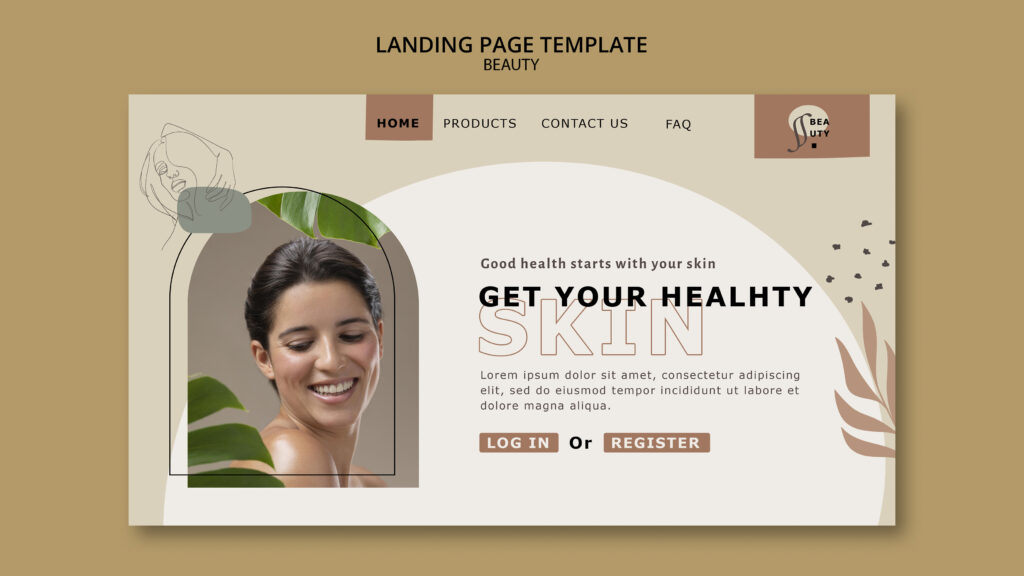
The “hero” section, the large banner at the top of your homepage, is your digital front door. It must immediately answer three questions: Where am I? What can I do here? And why should I stay? A powerful hero section combines a compelling headline, a high quality image, and a clear call to action (CTA) like “Book a Free Consultation.” It sets the tone and provides a direct path for interested visitors to take the next step.
Navigation Structure Improvement
If visitors can’t find what they need, they will leave. In fact, studies show that 61% of users leave for a competitor’s site if they don’t find what they’re looking for right away. Improving your navigation structure means creating a simple, logical, and intuitive menu. Use clear labels (e.g., “Facial Treatments” instead of “Aesthetic Solutions”) and ensure your most important pages are no more than a few clicks away. Good navigation makes users feel in control, which encourages them to explore your offerings.
Breadcrumb Navigation
Breadcrumb navigation is a secondary navigation aid, usually at the top of a page, that shows the user’s path (e.g., Home > Services > Laser Hair Removal). It helps users understand where they are within your site’s hierarchy and allows them to easily navigate back to higher level pages. This small feature reduces confusion and is a key part of user friendly site conversion optimization.
Service Page Optimization
Many visitors will land directly on a service page from a Google search. Each of these pages must act as a mini landing page, containing everything a user needs to make a decision. A well optimized service page includes a clear description of the treatment, its benefits, before and after photos, relevant testimonials, FAQs, and a prominent call to action. Including customer testimonials alone can increase conversions by up to 34%.
Internal Linking for Conversion
Strategic internal linking guides visitors through your site and toward a conversion goal. For example, a blog post about the benefits of a treatment should link to the corresponding service page, which in turn links to your booking page. These links create a natural funnel, keeping users engaged on your site and gently nudging them down the path from reader to lead. A good internal linking strategy is a subtle but effective tool for site conversion optimization.
Driving Action with Clear and Compelling Content
Your words and content structure have a massive impact on whether a user decides to act. Clarity converts better than cleverness every time.
Headline Optimization
On average, eight out of ten people read a headline, but only two out of ten will read the rest. This means your headline is your single most important piece of copy. A great headline grabs attention, communicates a clear benefit, and entices the user to keep reading. For example, “Achieve Radiant Skin” is far more compelling than a generic “Our Skin Treatments.”
Clear Treatment Messaging
Potential patients need to quickly understand what your treatments are and how they can help. Avoid jargon and overly technical language. Explain each service in simple, benefit focused terms. When information is easy to process, consumers are 86% more likely to purchase (or in this case, booking an appointment). Clarity builds trust and removes the friction of uncertainty.
Page Readability Optimization
Most web users scan content; they don’t read word for word. To cater to this, you must optimize for readability.
- Use short paragraphs and sentences.
- Break up text with clear headings and subheadings.
- Use bullet points to list benefits or key information.
- Ensure your font size and color contrast are easy on the eyes.
Making your text scannable improves website usability; research has shown scannable text improved measured usability by 47%, ensuring your key messages are actually absorbed.
Educational Content for Conversion
Educating potential patients is a powerful conversion strategy. By creating helpful blog posts, guides, or videos that answer common questions, you position your clinic as a trusted authority. Companies that offer educational content generate significantly more leads. One study found that consumers who read educational content from a brand were 131% more likely to buy from them.
FAQ Content for Objection Handling
Every potential patient has questions and concerns. A well crafted Frequently Asked Questions (FAQ) section addresses these objections head on. By proactively answering questions about results, safety, cost, and downtime, you remove mental roadblocks that prevent people from converting. An FAQ is like a virtual consultant, building confidence and nudging visitors closer to a decision. This is a simple but vital part of site conversion optimization.
Optimizing for the Final Step: The Conversion Itself
This is where the magic happens. Making it incredibly easy for users to get in touch or book an appointment is the final and most crucial piece of the puzzle. If you need help getting these elements right, the team at DevMart specializes in building high converting websites for clinics. You can schedule a free consultation to learn more.
Call to Action (CTA) Optimization
Your CTA is the button or link that tells the user what to do next, like “Book Now” or “Contact Us.” Optimizing your CTAs involves making them highly visible, using action oriented text, and placing them strategically. A simple change in a CTA’s color or text can increase conversions by over 20%. The path to conversion should always be obvious and compelling.
Simplified Appointment Scheduling
The more steps you add to the booking process, the more people you will lose. A multi location provider saw their appointment bookings jump by 63% simply by simplifying their online scheduling form. Ask only for essential information upfront. A long, complicated form can feel overwhelming and causes many users to give up. The goal is to make scheduling an appointment feel effortless.
Integrated Online Booking System
Modern consumers expect convenience. An integrated online booking system allows visitors to schedule appointments directly on your website, 24/7, without needing to make a call. A significant 77% of patients say the ability to book, change, or cancel appointments online is important. If a visitor is ready to book at 10 PM, an online system captures that lead when their interest is highest.
Contact Page Friction Reduction
Your contact page is the finish line for many conversions. Don’t create unnecessary obstacles. The average form abandonment rate is about 40%, often because forms are too long. Keep your contact form short and simple. Prominently display your phone number, email, and address. Hiding this information is one of the fastest ways to lose a potential patient’s trust.
Click to Call Button
For mobile users, a click to call button is essential. This feature allows a visitor to tap a button and instantly initiate a phone call to your clinic, removing the need to copy and paste a number. With 70% of mobile searchers having used a call button directly from search results, it’s clear that users want this one tap convenience.
Map and Direction on Contact Page
For a local business like a clinic, helping people find you is a key conversion point and ties directly into local SEO for clinics. An embedded Google Map on your contact page provides a visual reference and allows users to get directions with a single click. 51% of consumers used Google Maps in the last 30 days to look up information about local businesses, so integrating it directly on your site removes friction and helps turn online interest into an in person visit.
Promotion and Offer Presentation
Special offers and promotions can be a powerful motivator. The key is to present them clearly and create a sense of urgency. Use prominent banners, pop ups, or countdown timers to draw attention to your deals. A website that added a countdown timer to an offer saw an 8% increase in same-day orders after adding a homepage countdown timer. A well presented promotion can push hesitant visitors to take action now rather than later.
Live Chat and Chatbot
Live chat provides instant answers to visitor questions, which can be the difference between conversion and abandonment. In fact, 44% of online consumers say having a live person answer questions during their decision process is one of the most important features a site can offer. A chatbot can handle routine questions 24/7, ensuring you never miss a lead, even after hours.
Technical Excellence and Mobile Experience
A website’s behind the scenes performance and its experience on mobile devices are non negotiable components of modern site conversion optimization.
Website Speed Optimization
Page speed is critical; you can improve your website speed with image optimization, fast hosting, and streamlined code. A staggering 53% of mobile visitors will abandon a site if it takes more than 3 seconds to load. A 0.1-second improvement in mobile site speed increased conversions by 8.4% for retail sites. Optimizing images, using fast hosting, and streamlining code are technical tasks that have a massive, direct impact on your bottom line.
Mobile UX Optimization
With over 60% of healthcare searches happening on mobile devices, a poor mobile user experience (UX) is a conversion killer. Mobile optimization goes beyond just looking good on a small screen—start with a mobile-first web design approach. It involves creating a thumb friendly design with large, tappable buttons, simple navigation (like a hamburger menu), and ensuring everything loads quickly on mobile networks.
Mobile Friendly Form Design
Filling out forms on a smartphone can be a pain. A mobile friendly form uses a single column layout, large input fields, and asks for minimal information. The goal should be for a user to complete your primary form in under 60 seconds on their phone. If it’s a hassle, they will simply give up. This is a critical focus for any site conversion optimization strategy.
The Strategic Layer: Research and Measurement
True site conversion optimization is an ongoing process driven by data, not guesswork.
Customer Segment Research
Not all patients are the same. A young professional looking for Botox has different motivations than a new mother interested in skincare. Customer segment research helps you understand these different groups so you can tailor your messaging and design to their specific needs. In a case study, segmented email campaigns converted at 7.8% vs 3.4% for non-segmented campaigns.
CRO Tool Usage
Conversion Rate Optimization (CRO) tools provide the data you need to make informed decisions. Heatmap tools like Hotjar show where users click and scroll, while A/B testing platforms like Google Optimize let you test different versions of a page to see which performs better. Instead of guessing what works, these tools allow you to measure user behavior and systematically improve your results.
Ready to turn your website into a client generating powerhouse? The experts at DevMart live and breathe site conversion optimization for clinics. Get in touch today for a free, no obligation consultation.
Frequently Asked Questions
1. What is site conversion optimization in simple terms?
Site conversion optimization is the process of making your website as effective as possible at persuading visitors to take a desired action. For a clinic, this usually means booking an appointment, filling out a contact form, or calling your office. It involves improving everything from your headlines and images to your page speed and booking forms.
2. Why is the mobile experience so important for conversions?
The majority of your potential patients are likely browsing on their phones. If your website is slow, hard to read, or difficult to navigate on a small screen, they will quickly get frustrated and leave. A smooth, fast, and easy mobile experience is essential for capturing this large segment of your audience.
3. How long does it take to see results from site conversion optimization?
Results can vary. Some changes, like improving your call to action button or simplifying a form, can produce noticeable improvements within days. Other strategies, like creating educational content or improving SEO, are more long term but can deliver sustainable growth over months. The key is continuous testing and refinement.
4. What is the first thing I should fix on my clinic’s website?
While it depends on your specific site, two areas often provide the quickest wins: website speed and your primary calls to action. Ensure your site loads in under 3 seconds. Then, check that your “Book Now” or “Contact Us” buttons are highly visible and clear on every page, especially on mobile.
5. How do you measure the success of a site conversion optimization campaign?
Success is measured using key performance indicators (KPIs). The most important metric is your conversion rate (the percentage of visitors who complete a desired action). Other metrics include bounce rate, time on page, contact form submissions, and the number of online bookings or phone calls generated from the website.
6. Can I do site conversion optimization on my own?
You can certainly implement some basic principles yourself, like improving page readability or clarifying headlines. However, a comprehensive strategy often requires technical expertise in areas like site speed, user experience design, and A/B testing. Working with a specialist agency like DevMart can accelerate your results and ensure you are using proven, data driven methods.