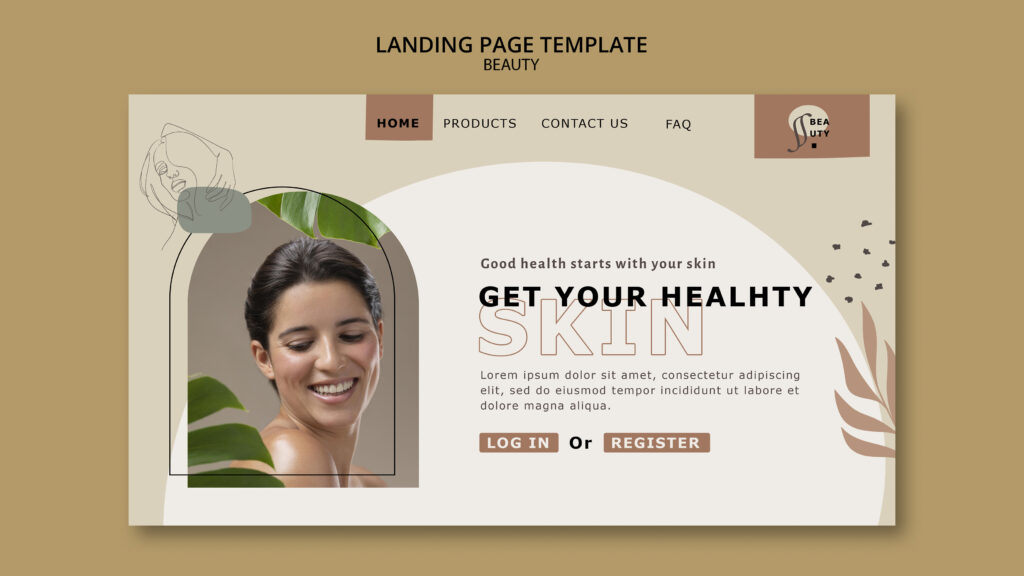
Getting traffic to your clinic’s website is only half the battle. The real challenge is turning those visitors into booked patients. Many practices invest heavily in attracting an audience but wonder why so few of those visitors take the next step. The truth is, there’s often a huge opportunity for growth hiding in plain sight. Only about 22% of companies are satisfied with their conversion rates, which means most websites—especially in the competitive aesthetics field—have room for significant improvement.
This is where conversion rate optimization (CRO) comes in. For a clinic, CRO is the systematic process of improving your website to increase the percentage of visitors who complete a desired action, like booking a consultation, submitting an inquiry form, or calling the clinic. The core conversion rate optimization best practices involve creating a data-driven strategy, designing a seamless patient journey, building trust with visitors, and continuously testing and improving your site. This guide walks through these essential practices that form the foundation of a high-performing clinic website.
Start with Strategy: Define Your Goals and Clinical Value
Before you change a single button, you need a clear strategy. Effective CRO is not about random guesses; it’s about focused, data-driven improvement that builds patient confidence.
Define Your Goals and Key Performance Indicators (KPIs)
You cannot improve what you do not measure. A goal is the action you want users to take (e.g., book a consultation), and a KPI is the metric you use to track progress (e.g., consultation form submission rate). Setting specific, measurable goals is proven to boost performance. In fact, in 90% of the studies, specific and challenging goals led to higher performance than easy goals, “do your best” goals, or no goals. Instead of a vague goal like “get more patients,” a strong CRO goal is “Increase ‘Book a Consultation’ form submissions by 15% in the next quarter.”
Embrace Data-Driven Decision Making
One of the most important conversion rate optimization best practices is to let data, not opinions, guide your strategy. This means using analytics, user behaviour data, and test results to make informed choices about your website. Companies that embrace data-driven decision-making are about 5% to 6% more productive and profitable than their competitors. Instead of relying on the highest-paid person’s opinion, you can use real evidence to find out what truly resonates with your potential patients.
Nail Your Value Proposition with Absolute Clarity
When a visitor lands on your site, they need to understand three things almost instantly:
- What treatments do you offer?
- Who are they for?
- Why should they trust your clinic and practitioners?
This is your value proposition. You have an incredibly short window to communicate it. Users form a first impression of a website in just 50 milliseconds. If your headline is vague or filled with overly clinical jargon, visitors will get confused and leave. Clarity and trust trump cleverness every time.
Craft a Seamless Patient Journey
Once your strategy is clear, focus on making the visitor’s experience as smooth and frictionless as possible. Every hurdle in their path is a chance for them to leave and book with a competitor.
Simplify the Path to Booking
Map out the steps a visitor takes to become a patient. Is every step absolutely necessary? Each additional click or form field causes a portion of users to drop off. A common area for friction is a multi-step booking process or a long, complex initial inquiry form. By removing unnecessary steps, you create a more direct path from interest to a booked consultation.
Simplify Your Website Navigation
If potential patients can’t find information, they can’t convert. Confusing navigation is a top reason for visitor frustration. Almost everyone (94%) believes easy navigation is the most useful website feature. Keep your menu labels clear (“Treatments,” “About Us,” “Before & After,” “Contact”), organize treatments logically, and ensure practitioner credentials are easy to find. A simple, intuitive structure encourages users to explore your services and builds confidence. Here’s why UX matters for SEO and conversions.
Optimize for Mobile Users
Today, optimizing for mobile is not optional. With around 59% of all web traffic coming from mobile devices, a poor mobile experience means you’re losing the majority of potential patients who are researching treatments on their phones. However, mobile conversion rates (around 2.2%) often lag far behind desktop (3.4% aggregate in Q4 2022), largely due to usability issues. Ensure your site has large, tappable buttons (like a “Tap to Call” feature), readable text without pinching or zooming, and simplified forms for a better mobile experience. Start with these mobile-first web design tips.
Optimize Page Speed
Website speed is a critical conversion factor, especially for image-heavy sites with Before & After galleries. Modern users are impatient, and even small delays can have a huge impact. A 1-second delay in page load time can cause a staggering 7% drop in conversions. Google’s research found that 53% of mobile visitors will abandon a page that takes longer than three seconds to load. Compressing images, optimizing code, and using a content delivery network (CDN) are key steps to make your site faster and keep visitors engaged. See our guide on how to improve your website speed for better Google rankings for a step-by-step checklist.
Ensure Solid Technical Performance
A beautiful website is useless if it’s broken. Technical issues like broken links, non-loading images in a gallery, or a booking form that doesn’t work on certain browsers are silent conversion killers. A staggering 88% of online consumers are less likely to return to a site after a bad experience, and a technical glitch erodes the trust essential for a medical practice. Regularly testing your site across different devices and browsers helps ensure a smooth, error-free journey for every user.
Master Your Key Conversion Points
Certain pages and elements on your clinic’s site have an outsized impact on conversions. Giving these areas special attention is one of the most effective conversion rate optimization best practices.
Landing Page Optimization
A treatment-specific landing page is a visitor’s first impression after clicking an ad, and it needs to be perfectly focused. The average landing page conversion rate is only around 2.35%, but top-performing landing pages have a median conversion rate of 25% (top 25th percentile). The key is a singular focus (one goal per page) and strong message match—ensuring the headline and offer on the page align perfectly with the ad that brought the visitor there. An ad for “Lip Fillers in London” should lead to a page all about your lip filler treatments, practitioners, and results, not the homepage. See our landing page optimization guide to structure yours.
Call to Action (CTA) Optimization
Your call to action is the gateway to a new patient. It’s the button or link that tells users what to do next. Optimizing its color, size, placement, and wording can lead to massive gains. Instead of a generic “Submit,” try more specific and reassuring text like “Book My Consultation” or “Request a Callback.” The goal is to make your CTA impossible to miss and compelling to click.
Form Optimization
Forms are necessary to capture leads, but they are also a major source of friction. Each field you ask a user to fill out is another reason for them to give up. Reducing the number of fields in the initial contact form is a proven tactic; HubSpot’s analysis of 40,000+ landing pages found three-field forms converted best. Only ask for the information you absolutely need for the initial contact (e.g., Name, Email, Phone). You can gather more detailed medical history on a secondary intake form after the appointment is requested.
Booking & Inquiry Process Optimization
For aesthetic clinics, the booking process is the final, most critical hurdle. A clunky or confusing system will cost you patients. Key reasons for abandonment include a lack of available appointment times, an overly complex booking tool, or uncertainty about what happens after submitting a form. Optimize your booking process by offering clear instructions, ensuring the tool is mobile-friendly, and sending an immediate confirmation email that sets expectations for the next steps. A streamlined booking process is a specialty for agencies like DevMart, who focus on turning more visitors into booked consultations.
Build Trust and Communicate Clearly
Users will not book a medical procedure if they don’t understand what you’re offering or don’t trust you with their care. Persuasion in aesthetics is built on a foundation of clarity and credibility.
Be Crystal Clear with Your Messaging
Potential patients don’t read websites; they scan them. Eye-tracking studies show that 79% of users scan a new page for keywords and points of interest. This means your core message needs to be communicated through scannable headlines, subheadings, and bullet points that highlight patient benefits (e.g., “Natural-looking results,” “Minimal downtime,” “Performed by certified practitioners”). Avoid overly technical jargon and state the value in plain, simple language.
Maintain Message Match Consistency
The message that gets a user to click must match the message they see on the landing page. If an Instagram ad promises a consultation with a specific practitioner, the landing page must feature that same practitioner prominently. This consistency reassures users they are in the right place and that your clinic is professional and organized.
Use Social Proof to Build Confidence
People look to others when making decisions, especially when it comes to their appearance and health. Social proof, like patient reviews, video testimonials, and Before & After galleries, is essential. An incredible 92% of consumers trust recommendations from people they know above all other forms of advertising. Displaying real patient reviews can increase the likelihood of a booking significantly. Showcasing that other people have trusted you and had great results is a powerful way to persuade new visitors. Here’s how to use testimonials and reviews to lift conversions.
Use Trust Signals to Reduce Anxiety
When users are considering a medical procedure and are asked for personal information, their skepticism peaks. Trust signals are elements that reassure them your clinic is legitimate, professional, and safe. These include:
- Prominent photos, bios, and credentials of your practitioners.
- Logos of professional bodies or regulatory authorities you belong to.
- An easily accessible privacy policy that explains how patient data is handled.
- A physical clinic address and a visible phone number.
- Details about your safety protocols and commitment to patient care.
Adding these visual cues, especially near booking forms, can ease patient anxiety and boost completions. Make sure you’ve covered the essential security features every website needs.
Analyze, Test, and Iterate Your Way to Success
Conversion rate optimization is not a one-time project; it’s an ongoing process of learning and improvement. These conversion rate optimization best practices ensure your efforts are effective and sustainable.
Use Behavioral Analytics to Understand the ‘Why’
Standard analytics tell you what is happening (e.g., 70% of users leave from your Botox page). Behavioral analytics tools like heatmaps and session recordings tell you why. You can literally watch where users click, how far they scroll on a treatment page, and where they get stuck in the booking process. Pair this with website user journey mapping to spot and smooth the biggest drop-offs.
Collect and Act on User Feedback
The best way to know what your potential patients are thinking is to ask them. Use on-site surveys or exit-intent popups to gather feedback. Asking a simple question like “Was there any information you couldn’t find today?” can reveal invaluable insights into hidden conversion barriers, like unclear pricing or questions about treatment aftercare.
Identify and Remove Conversion Barriers
A conversion barrier is anything that creates friction, confusion, or doubt for a user. It could be a confusing treatment name, a slow-loading Before & After gallery, or a booking calendar with no availability for weeks. Your job is to play detective and find these roadblocks. A famous example comes from Expedia, which reportedly resulting in $12m of profit a year just by removing one optional, confusing form field. For a clinic, this could be as simple as clarifying what’s included in a “free consultation.”
Validate Changes with A/B Testing
Once you have a hypothesis for an improvement, don’t just implement it. Test it. A/B testing involves showing two versions of a page to different users to see which one performs better. This data-driven approach removes guesswork. You could test a video testimonial against a text one on a treatment page, or try different headlines to see which one leads to more clicks on your “Book Now” button. A professional team like DevMart can help you design and run experiments that lead to real, measurable wins. For fundamentals, see our guide to website design for conversion optimization.
Use Personalization for a Tailored Experience
Personalization involves tailoring the website experience to individual users. For a clinic, this can be as simple as using geolocation to show “Book a Consultation at our London Clinic” to a user in the UK. For a returning visitor, you could highlight the treatment page they viewed on their last visit. Consumers appreciate this tailored approach; a remarkable 80% are more likely to do business with a company that offers personalized experiences.
Conclusion: A Continuous Journey to Growth
Mastering these conversion rate optimization best practices is an ongoing journey, not a final destination. The process is a virtuous cycle: you analyze patient behavior, form a hypothesis, test your changes, and measure the results. Each test provides new learnings that fuel the next round of improvements.
Even small, incremental gains can compound over time into significant growth in bookings. By focusing on your patient’s experience, building trust, and making data-driven decisions, you can systematically turn more of your hard-earned traffic into loyal patients. If you need help identifying where to start, consider getting a free consultation to uncover the biggest opportunities on your site.
Frequently Asked Questions (FAQ)
1. What is a good conversion rate for a clinic?
A “good” conversion rate varies by treatment, traffic source, and type of conversion (e.g., form fill vs. phone call). While the average landing page converts around 2.35%, a highly optimized clinic site might aim for 5-10% for consultation requests. Focus on continuously improving your own baseline rate rather than chasing a universal number.
2. How long does it take to see results from CRO?
You can sometimes see results from fixing a major issue (like a broken booking form) almost overnight. However, a structured CRO program based on A/B testing typically takes a few months to yield significant, compound results, as each test needs enough time and traffic to produce statistically valid data.
3. What are the most important conversion rate optimization best practices for a new clinic website?
For a new site, focus on the fundamentals: a crystal-clear value proposition, prominent practitioner bios and credentials, fast page speed, a seamless mobile experience, and simple navigation. Ensure your core patient journey from a treatment page to a booked consultation is as frictionless as possible.
4. Can I do conversion optimization myself or should I hire an agency?
You can certainly start on your own by using analytics and collecting user feedback. However, implementing a full CRO program with structured A/B testing, behavioral analysis, and expert design requires specialized tools and expertise. An agency specializing in aesthetics can accelerate your progress and avoid common pitfalls.
5. What is the difference between SEO and CRO?
Search Engine Optimization (SEO) focuses on getting more traffic to your website from search engines. Conversion Rate Optimization (CRO) focuses on converting the traffic you already have into patients. They work together: SEO brings in potential patients, and CRO ensures they have a great experience and book an appointment.
6. How does page speed affect conversion rates?
Page speed has a direct and significant impact. Slower pages lead to higher bounce rates and lower conversions. This is especially true for clinics that rely on high-resolution images for Before & After galleries. Studies show that even a one-second delay can reduce conversions by approximately 7%. Faster pages provide a better patient experience and build trust.