You’ve spent years building your clinic’s reputation. Your patients love you. Your reviews are strong. Your staff is trained to make everyone feel taken care of the second they walk in.
None of that matters yet to the person who just found you on Google ten seconds ago.
Before a prospective patient ever calls, books a consult, or sets foot in your clinic, they’ve already formed an opinion of you — based entirely on your website. That’s not a modern quirk of internet behavior. It’s simply how trust gets built when the alternative — walking in and asking around — no longer happens first.
Here’s why this happens, and what it means for how you should think about your site.
The Website Is the New First Impression, Not the Second
For most of your clinic’s history, the first impression happened in person: a phone call, a walk-in, a referral conversation. Today, that first impression happens on a screen, almost always before any human interaction at all.
By the time someone calls your clinic, they’ve usually already:
- Looked at your website
- Skimmed a few reviews
- Compared you (consciously or not) to at least one other clinic’s site
The call isn’t the first impression anymore. It’s closer to the second or third step in a decision that’s already partly made. If your website loses them, they never make it to step two — you don’t even know they existed.
Why Aesthetics Specifically Makes This Worse (or Better)
Aesthetic and cosmetic treatments carry a particular kind of vulnerability. Patients are often nervous, self-conscious, and evaluating risk on two fronts at once — “will this look good” and “is this safe.” That combination makes people scrutinize everything available to them before committing, and your website is the most available thing there is.
Compare this to, say, booking a haircut. Low risk, low research. Now compare it to choosing who injects filler into your face. High risk, high research. Patients in your ICP are actively looking for reasons to trust — or reasons to keep looking. Your website either gives them the former or hands them the latter.
What Patients Are Actually Evaluating (Even If They Couldn’t Say It Out Loud)
Most visitors won’t consciously think “I am now assessing this website’s design quality.” But they’re absorbing signals fast, usually within the first few seconds:
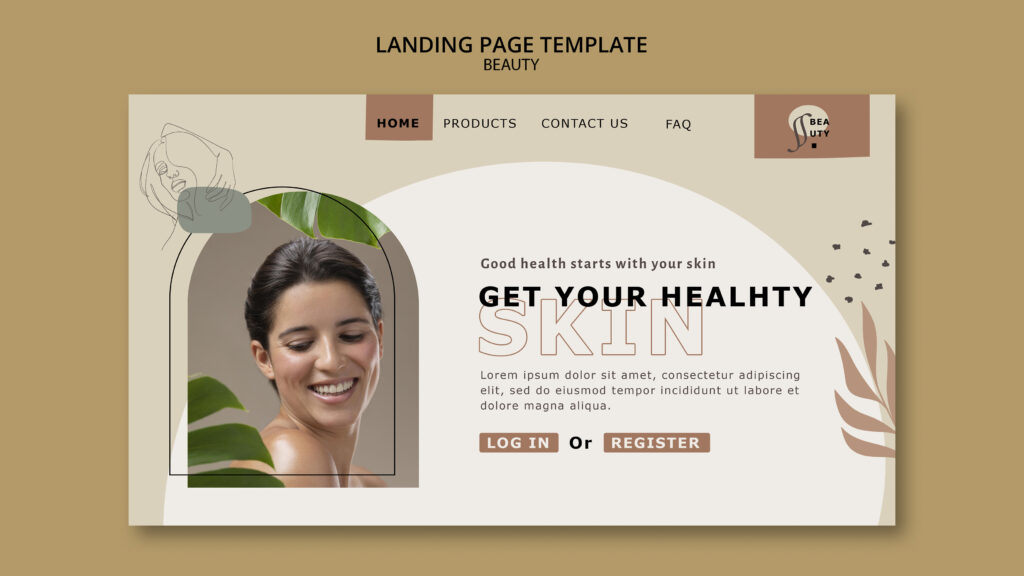
- Does this look current, or does it look neglected? An outdated design, broken layout, or dead links reads as “this business might not be paying attention to detail” — a scary thought when the detail in question is a needle near their face.
- Does this look like every other clinic, or does it look like this clinic? Generic stock photography and copy makes it hard for a patient to form any impression at all, which often defaults to “not memorable enough to choose.”
- Can I find what I need quickly? Pricing information, provider names, services offered, and a way to book. If any of these require real digging, patients assume the in-person experience will be similarly frustrating.
- Do the photos and reviews look real? Patients have gotten good at spotting stock photos and stiff, generic testimonials. When something feels staged, skepticism about everything else on the page follows.
The Cost of Losing This Silent Evaluation
This is the part that’s easy to underestimate: when your website loses someone, you never see it happen. There’s no bounce notification, no “sorry, your site didn’t convince me” email. They simply don’t call. From your side, it looks like slow organic growth or underperforming ads — when the actual issue might be that your website is quietly disqualifying good leads before they ever reach your front desk.
This is especially costly if you’re running paid ads or getting strong organic traffic. You could be paying to drive exactly the right person to your site, only to lose them at the last, most controllable step in the entire funnel.
What This Means Practically
You don’t need to reinvent your brand to fix this. A few high-leverage areas tend to carry most of the weight:
- Your homepage’s first screen — what a visitor sees with zero scrolling has to communicate who you are and why you’re credible almost instantly.
- Real photography over stock, even if it’s not a full professional shoot yet — a handful of real clinic and provider photos beats a polished stock library.
- A frictionless, fast booking path — because a patient who’s already decided to trust you can still be lost to a clunky form or a phone-only booking process.
- Recency signals — an active blog, current reviews, and updated service info all quietly say “this business is alive and paying attention.”
The Reframe Worth Sitting With
It’s tempting to think of your website as a digital brochure — something that describes your clinic. In practice, for a meaningful share of your prospective patients, it is your clinic, at least for the two minutes that matter most. They’re not reading about your business; they’re experiencing a version of it, and deciding in real time whether it deserves their trust, their time, and eventually their money.
Treating your website with the same intentionality you bring to your physical space isn’t a marketing nice-to-have — it’s the difference between a lead that calls and one that quietly disappears.
Not sure how your site is actually landing with new visitors? [Book a free website audit] and we’ll show you exactly where prospective patients are dropping off before they ever pick up the phone.