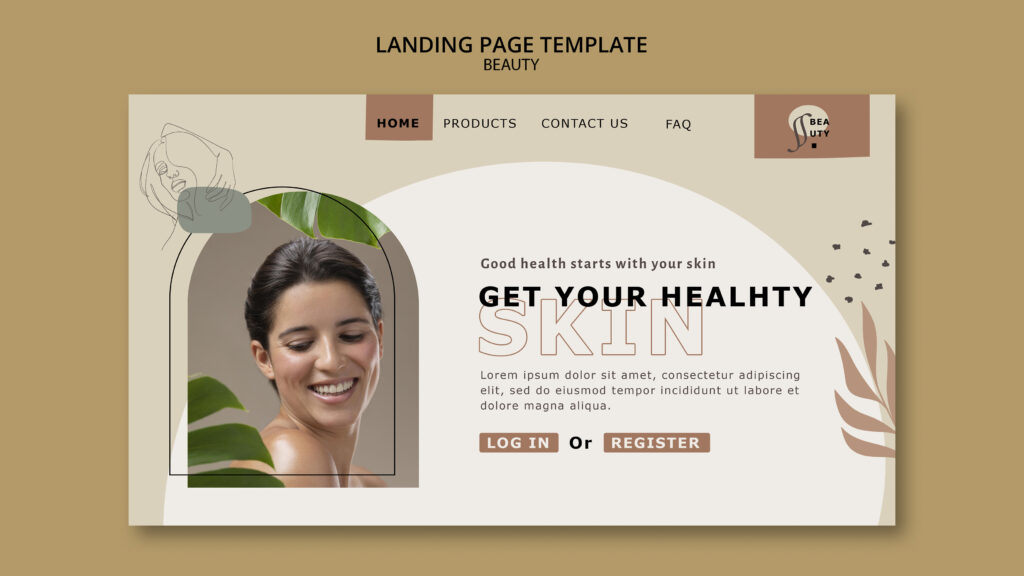
To design a conversion-focused website for an aesthetic clinic, you must build trust through authentic storytelling, create a seamless mobile-first user experience, and showcase results with high-quality, professional visuals. It’s about combining a solid strategy with persuasive content and a flawless technical foundation to guide visitors from their first click to booking a consultation. This guide will walk you through each of these critical steps, transforming your online presence into your most powerful patient acquisition tool.
The Foundation: Strategy, Story, and Trust
Before a single line of code is written or a color palette is chosen, a successful website begins with a solid strategy. This is about understanding who you are, who you’re talking to, and what you want them to feel.
Know Your Audience and Positioning
First, you need to define your ideal patient. Are you targeting young professionals seeking preventative treatments, or an older demographic interested in rejuvenation? Understanding their needs, goals, and even their values is critical. A website designed for a luxury market will look and feel very different from one targeting accessible, everyday aesthetics. Research shows that 70% of consumers prefer brands whose values align with their own, so positioning your clinic to reflect what your patients care about (like natural results or a focus on safety) builds an instant connection.
Craft Your Value Oriented Messaging
Patients aren’t buying a syringe of filler; they are buying confidence. Your website copy should focus on the benefits and outcomes, not just the technical features of a treatment. Instead of saying “We use hyaluronic acid fillers,” say “Restore youthful volume and smooth away lines for a refreshed, natural look.” This value first approach answers the patient’s core question: “What’s in it for me?” Clear, benefit driven messaging immediately shows visitors you understand their goals, which encourages them to stay and learn more.
Tell Your Story on the About Page
The “About Us” page is often one of the most visited pages on a clinic’s site. This is your chance to humanize your practice. Don’t just list credentials. Tell a story. What inspired the founding of your clinic? What is your core philosophy on patient care? Introduce your team with warm, professional photos and brief bios that highlight their passion and expertise. A compelling story builds an emotional connection and makes your clinic more memorable than a competitor with a generic, faceless website.
Designing for the Patient: User Experience and Accessibility
A great user experience (UX) makes it effortless for visitors to find what they need and take action. When considering how to design a conversion focused website for an aesthetic clinic, the patient’s journey should be at the forefront of every decision.
Prioritize a Mobile First and Responsive Design
Today, most of your potential patients will find you on their phones. In fact, about 64% of global web traffic comes from mobile devices. A mobile first design approach means your site is designed for the small screen first and then adapted for larger screens. This ensures a seamless experience for the majority of users.
This is complemented by a responsive layout, which automatically adjusts to fit any screen size, from a smartphone to a desktop monitor. Google also prioritizes mobile friendly sites in its rankings, so this is non negotiable for SEO. A site that’s difficult to use on a phone will frustrate visitors, and studies show they are five times more likely to abandon the site and find a competitor.
Focus on Simple Navigation and Thumb Friendly Layouts
Your site’s navigation should be crystal clear. Use simple, logical labels for your menu items like “Treatments,” “About Us,” and “Contact.” A well planned site architecture ensures that any page is reachable within just a few clicks. For mobile users, a thumb friendly navigation is key. This means placing important buttons and menu items where they can be easily tapped with a thumb, typically in the lower or central part of the screen. When navigation is intuitive, visitors stay longer and explore more of what you have to offer.
Create a Smooth Online Booking Experience
In today’s world, patients expect the convenience of booking online 24/7. A complicated or clunky booking process is a major conversion killer. Your online booking user experience should be simple, asking only for essential information to secure the appointment. Integrating a scheduling tool that shows real time availability and sends instant confirmations provides reassurance and reduces administrative work for your staff. Clinics that offer easy online scheduling often see a significant increase in consultation bookings.
Embrace Accessibility and Inclusivity
An accessible website is one that can be used by everyone, including people with disabilities. This means using alt text for images, ensuring high contrast text, and making the site navigable by keyboard—see our website accessibility best practices for a full checklist. Not only is this ethically important, but it also widens your potential patient pool.
Inclusivity goes a step further. Your website’s imagery and language should reflect the diversity of your clientele. Featuring patients of different ages, genders, and skin tones makes everyone feel welcome. An inclusive approach shows that your clinic is a safe and understanding space for all.
The Visuals: Building an Emotional Connection
The aesthetics industry is visual, and your website must reflect that. Great design builds credibility and evokes the right emotions in your visitors.
Harness the Power of Visual Design and Emotional Impact
First impressions are formed in a flash. Research shows users judge a site’s visual appeal in just 50 milliseconds. A clean, professional, and modern design immediately communicates quality and trustworthiness. Your color scheme, fonts (typography), and layout should all align with your brand’s personality, whether it’s luxurious and serene or clinical and cutting edge. A consistent layout and typography across all pages reinforces your brand and creates a polished, reliable user experience.
Create a Compelling Hero Section
The hero section is the large banner at the top of your homepage. It’s the first thing visitors see and it must grab their attention immediately. Use a high quality, emotionally resonant image or video, a concise, benefit driven headline, and a clear call to action button. Your hero section should instantly tell visitors who you are, what you offer, and why they should choose you.
Invest in Professional and Authentic Imagery
Generic stock photos are a credibility killer. Imagery authenticity is about using real, high quality photos and videos of your clinic, your team, and your actual patient results (with their consent, of course). Professional photography and video show your practice in the best light and help potential patients visualize their own experience. A welcome video from the lead practitioner or video testimonials can be incredibly powerful for building a personal connection and trust. People remember 80% of what they see compared to only 20% of what they read, making authentic visuals a critical investment.
Content That Converts: Educating and Persuading
Your website’s content is your digital salesperson. It needs to be informative, persuasive, and structured to guide visitors from curiosity to conversion.
Structure Treatment Pages Around Patient Questions
When someone visits a page for a specific treatment like Botox or laser hair removal, they have questions. Structure your content to answer them directly. Use headings like:
- How Does It Work?
- Am I a Good Candidate?
- What to Expect During Treatment
- Recovery and Aftercare
- Pricing Information
This Q&A style format makes the information easy to scan and digest, building confidence and positioning you as a transparent expert.
Showcase Results with a Before and After Gallery
In aesthetics, seeing is believing. A well organized before and after gallery is one of the most powerful conversion tools on your site. It provides tangible proof of your skills and helps set realistic expectations for patients. High quality, consistently shot photos build immense trust and often give a hesitant visitor the final push they need to book a consultation.
Leverage Testimonials and Social Proof
What others say about you is far more persuasive than what you say about yourself. Testimonials and social proof come in many forms:
- Patient quotes and video testimonials
- Star ratings from Google or RealSelf
- Logos of media outlets you’ve been featured in
- Awards and recognitions
Displaying this proof prominently on your site reduces anxiety and builds credibility. One study found that positive testimonials can increase conversions by around 34%.
Be Transparent with Pricing
Price is a major consideration for most patients. While exact quotes may require a consultation, providing starting prices or price ranges demonstrates honesty and respect for your patients’ time. Pricing transparency helps pre qualify leads and builds trust by showing you have nothing to hide. It can also save your staff time by filtering for serious inquiries.
The Technical Backbone: Performance and Security
Behind every great website is a solid technical foundation. These elements are crucial for SEO, user trust, and overall performance. A key part of knowing how to design a conversion focused website for an aesthetic clinic is ensuring the technical details are handled correctly.
Prioritize Page Speed and Technical SEO
Slow websites lose visitors fast. More than half of mobile users will leave a site if it takes longer than 3 seconds to load. Page speed optimization involves compressing images, streamlining code, and using quality hosting to ensure your site is lightning fast.
Technical SEO covers all the behind‑the‑scenes optimizations that help search engines find and rank your site. Pair these foundations with practical on‑page SEO tips to improve visibility. This includes a clean page structure with proper heading tags (H1, H2, etc.), a mobile friendly design, and a secure (HTTPS) connection. Getting these technical basics right is fundamental to being visible on Google.
Build Topical Authority with Content and Internal Linking
Search engines reward websites that demonstrate deep expertise. By creating comprehensive content around your core services (a strategy known as content marketing and patient education), you build topical authority. A blog with articles answering common patient questions is a perfect way to do this.
Internal linking, or linking between related pages on your site, helps both users and search engines discover your content and understand how it connects. This strengthens your site’s overall authority and can boost your rankings.
Implement HIPAA Compliant Forms and Data Security
As a medical practice, protecting patient privacy is non negotiable. If your contact forms collect any health information, they must be HIPAA compliant to ensure data is encrypted and secure. Beyond HIPAA, general data security—starting with essential security features like having an SSL certificate (the padlock icon)—is vital for building user trust. A secure site reassures patients that their personal information is safe with you.
Boost Visibility with Local SEO and Schema
For a local business, Local SEO is paramount. This involves optimizing your Google Business Profile, encouraging patient reviews, and ensuring your clinic’s name, address, and phone number are consistent across the web. A strong local presence ensures you show up when potential patients search for “aesthetic clinic near me.” With 46% of Google searches having local intent, this is a massive opportunity.
Schema markup is code you add to your site to help Google understand your content. It can lead to rich snippets in search results, like star ratings or FAQ dropdowns, making your listing more eye catching and increasing clicks. This can also help you win featured snippets, which are the answer boxes at the top of search results.
The Long Game: Measure, Test, and Improve
A website is never truly “done.” The final piece of understanding how to design a conversion focused website for an aesthetic clinic is embracing a cycle of continuous improvement.
By using analytics tools like Google Analytics, you can track how visitors interact with your site. You can see which pages are popular, where users are dropping off, and how they found you. This data provides invaluable insights into what’s working and what isn’t.
A/B testing allows you to test changes, like a different headline or button color, to see what performs best. This data driven approach, combined with regular analysis, allows for continuous improvement, ensuring your website evolves and remains a powerful asset for your clinic’s growth. At DevMart, we build websites on this principle, ensuring they are not just beautiful at launch but are also primed for ongoing optimization.
If you are ready to implement these strategies, booking a discovery call can be the first step toward a website that truly works for your clinic.
Frequently Asked Questions
1. What is the most important element of a conversion focused website for an aesthetic clinic?
While every element is important, building trust is the absolute core. This is achieved through a combination of social proof (testimonials, reviews), professional and authentic imagery (real before and afters), and transparent content that showcases your expertise and puts the patient first.
2. How much does it cost to design a conversion focused website for an aesthetic clinic?
Costs can vary widely based on complexity and features. Simple template based sites might start in the low thousands, while fully custom designs with advanced integrations can be much more. It’s best to view it as an investment in your primary marketing asset. Many agencies, like DevMart, offer packages at different price points.
3. How long does it take to build a new clinic website?
A typical timeline can range from 4 to 12 weeks. This includes stages for strategy and discovery, design, content creation, development, and testing. The process can be faster if the clinic has all its content and photos ready from the start.
4. Can I just use a simple website builder for my clinic?
While builders are accessible, they often lack the customization, technical SEO foundations, and strategic integrations (like HIPAA compliant forms and seamless booking) needed for a high performing medical aesthetic site. An experienced agency will know how to design a conversion focused website for an aesthetic clinic that addresses these specific needs.
5. How do I get more patient reviews for my website and Google Business Profile?
The best way is to ask! Implement a simple process where you follow up with satisfied patients via email or text a few days after their appointment, providing a direct link to your Google review page. Make it as easy as possible for them to share their positive experience.
6. What is the difference between a normal website and a conversion focused website?
A normal website acts like a digital brochure; it provides information. A conversion focused website is a strategic tool designed with a specific goal in mind: to guide visitors toward taking a desired action, such as booking a consultation. Every element, from the messaging to the button placement, is intentionally crafted to increase the likelihood of that action.