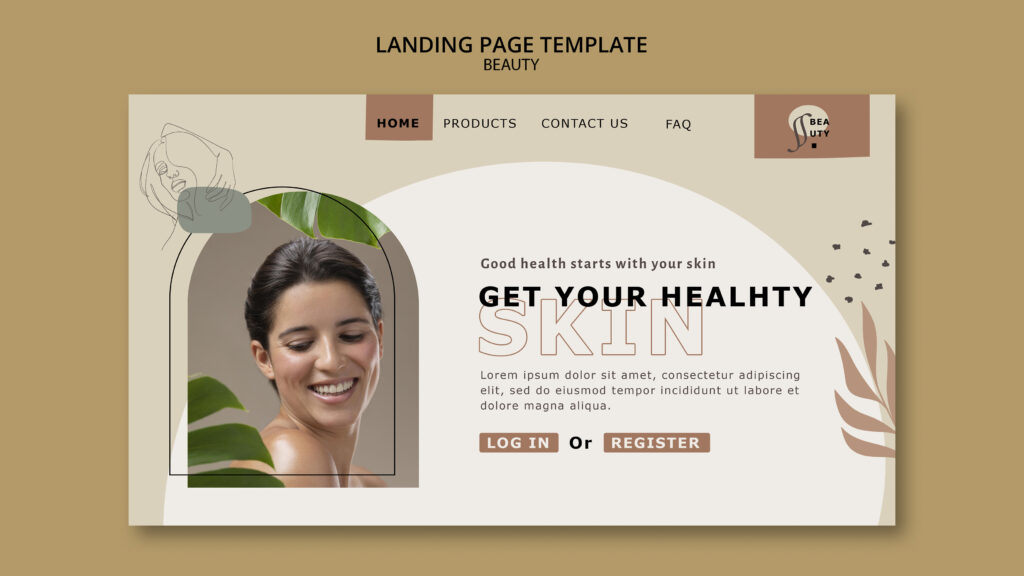
TL;DR
A well-structured treatment page needs to do two things at once: rank for local search queries like “Botox + city” and convert visitors into booked consultations. This guide defines every concept involved, from site architecture and on-page SEO elements to conversion triggers and technical requirements. Each term includes a clear explanation of what it is, why it matters for clinics specifically, and how to implement it on treatment pages that actually perform.
Introduction: Most Treatment Pages Are Built Wrong
The typical clinic website has a treatment page that reads like a product brochure. A paragraph about the procedure, a stock photo, and a “Contact Us” button buried at the bottom. It looks fine. It converts almost nobody.
Understanding how to structure a treatment page for local SEO and conversions is not a design exercise. It is a strategic project involving content architecture, search optimization, trust signals, and conversion psychology, all working together on a single page.
The stakes are real. The global medical spa market reached USD 21.21 billion in 2024 and is projected to hit USD 78.23 billion by 2033, growing at 15.77% CAGR. More clinics are competing for the same local keywords every month. A treatment page that worked three years ago will not cut it now.
This glossary covers every structural and strategic term a clinic owner, web developer, or marketing team needs to understand. Each definition is tied to treatment pages specifically, not generic SEO advice. If you are wondering why aesthetic clinics need a professional website in the first place, start there. Then come back here for the blueprint.
The Anatomy of a Treatment Page
Before diving into the glossary terms, here is the top-to-bottom structure of a treatment page that ranks locally and converts browsers into booked patients. Every section that follows in this guide ties back to this framework.
- Hero Section with treatment name, city, real patient image, and primary CTA
- Treatment Overview covering what it is, who it is for, and how long it takes
- Benefits and Expected Outcomes with specific, honest claims
- The Process / What to Expect section reducing anxiety about the unknown
- Before-and-After Gallery categorized by concern, with captions
- Pricing Information (yes, include it)
- Practitioner Bio with qualifications and photo
- FAQ Section answering cost, safety, downtime, and results questions
- Reviews and Testimonials from verified patients
- Final CTA and Booking Integration with minimal friction
- Related Treatments linking to other service pages
No ranking page in the current search results maps this full anatomy with both the SEO rationale and the conversion rationale for each section. That is the gap this guide fills.
Section A: Site Architecture Terms
Treatment Page
A treatment page is a dedicated page on a clinic website focused on a single procedure or service, such as Botox, dermal fillers, or chemical peels. It is the most important page type for any aesthetic clinic website because 72% of patients search for specific treatments, not generic terms like “med spa.”
SEO purpose: Targets a specific keyword (e.g., “lip fillers Manchester”) with focused, relevant content that Google can clearly match to a searcher’s query.
Conversion purpose: Gives the visitor everything they need to make a booking decision without leaving the page: what the treatment involves, what results to expect, what it costs, and who will perform it.
A treatment page should be built as a Page in WordPress (not a Post), because pages allow full UX control, better conversion paths, and stronger internal linking, as Clinic Grower notes in their aesthetic clinic SEO guide.
Hub-and-Spoke Model (Topic Cluster)
A content architecture where one main treatment page (the hub) sits at the center, with multiple supporting pages (spokes) linking back to it. The hub targets the primary commercial keyword. The spokes target related long-tail queries, specific concerns, or location variations.
For example, a hub page for “anti-wrinkle injections” might have spokes for “forehead lines treatment,” “crow’s feet Botox,” and “anti-wrinkle injections London.”
This matters because Google assigns authority to a topic based on the depth of coverage, not just a single page. As Websites For Clinics explains, “A site with a well-structured hub and five supporting sub-pages will consistently outrank a site with one standalone treatment page.”
Digitalis Medical recommends the practical formula: create one core service page designed to sell, write 3 to 5 supporting blog posts answering specific questions, and link them all back to the service page.
Silo Structure
Silo structure is the broader organizational principle behind topic clusters. It means grouping related content into distinct categories (silos) that do not overlap. Each silo covers one treatment category and contains its hub page, sub-pages, and supporting blog content.
A clinic offering Botox, dermal fillers, and skin treatments would have three silos. Content within each silo links internally to reinforce topical relevance. Content across silos links sparingly, usually through the main navigation or a services overview page.
URL Structure
The way page addresses are organized in the site hierarchy. Clean, descriptive URLs help both search engines and users understand what a page is about before clicking.
Best practice for treatment pages follows a clear hierarchy. Websites For Clinics provides this model:
/anti-wrinkle-injections/for the hub page/anti-wrinkle-injections/forehead-lines/for a concern-specific sub-page/anti-wrinkle-injections/london/for a location sub-page/dermal-fillers/lip-fillers/for a treatment-area sub-page
Practitioners on the Local Search Forum confirm this approach works in practice. One contributor noted: “I always use mydomain.com/category/service/ where ‘category’ could be anything that the services have in common,” citing benefits for user-friendliness, analytics tracking, and URL relevance. The consensus was that flat URL structures become unmanageable once a clinic offers more than a handful of treatments.
Internal Linking
The practice of linking pages within the same website to each other. On a treatment page, internal links serve two functions: they pass SEO authority between related pages, and they guide visitors deeper into the site toward booking.
Every treatment page should link to:
- 2 to 3 related treatment pages (cross-selling opportunity)
- The main services overview page
- The booking or consultation page
- At least one relevant blog post that answers a common patient question
Internal links are the connective tissue of a well-structured clinic website. Without them, even great content sits in isolation, invisible to both Google’s crawlers and potential patients.
Three-Click Rule
The principle that any page on a website should be reachable within three clicks from the homepage. For clinic websites, this means treatment pages should never be buried deep in navigation. A patient landing on the homepage should reach any specific treatment page in two clicks at most, ideally one.
This is not just a usability preference. Pages deeper in the site hierarchy receive less internal link equity, which weakens their ability to rank.
Section B: On-Page SEO Terms
These are the elements that live on the treatment page itself and directly influence how search engines understand and rank it. For a deeper exploration of these fundamentals, see this guide on on-page SEO tips to boost your website’s visibility.
Title Tag
The HTML title that appears in search engine results and browser tabs. It is one of the strongest on-page ranking signals and the first thing a potential patient reads in Google.
For treatment pages, the formula is straightforward: treatment name + city + clinic name. Keep it under 60 characters and front-load the treatment keyword. Example: CoolSculpting Denver | [Your Clinic Name].
A weak title tag like “Our Services” or “Treatment Page” wastes the single most valuable piece of on-page real estate.
Meta Description
The short summary (150 to 160 characters) that appears below the title tag in search results. It does not directly affect rankings, but it heavily influences whether someone clicks through to the page.
For treatment pages, include a specific benefit, a trust signal, or a differentiator. “FDA-cleared CoolSculpting in Denver. Board-certified team. See real patient results. Book your free consultation today.” That is more clickable than “We offer a range of body contouring treatments at our clinic.”
H1 Tag
The main heading on the page. There should be exactly one H1 per treatment page, and it should include the primary keyword with the location. Example: “Lip Fillers in Manchester” or “Botox Treatment in Sydney, Northern Beaches.”
The H1 tells both Google and the visitor what this page is about. It should match the search intent precisely. If someone searches “lip fillers Manchester,” the H1 should mirror that language, not say “Dermal Enhancement Services.”
Header Hierarchy (H2 / H3)
The subheadings that organize content into scannable sections. H2 tags mark major sections (Benefits, The Process, Pricing, FAQs). H3 tags break those sections into sub-topics.
A strong header hierarchy for a treatment page that targets local SEO and conversions might look like:
- H1: Botox Treatment in [City]
- H2: What Is Botox and How Does It Work?
- H2: Benefits of Botox for [Concern]
- H2: What to Expect During Your Appointment
- H2: Botox Pricing at [Clinic Name]
- H2: Before and After Results
- H2: Meet Your Practitioner
- H2: Frequently Asked Questions
- H3: How long does Botox last?
- H3: Is Botox safe?
- H3: How much does Botox cost in [City]?
Each H2 and H3 is an opportunity to target a related long-tail keyword while keeping the content organized for human readers.
Primary Keyword
The single most important search term a treatment page is optimized for. Each treatment page should target one primary keyword, and it should be the term with the highest relevant search volume that matches patient intent.
For local clinics, the primary keyword almost always follows the pattern: [treatment] + [city]. “Dermal fillers London.” “Chemical peel Brisbane.” “Botox near me.”
Trying to optimize one page for multiple unrelated treatments dilutes its focus and weakens its ranking potential.
Long-Tail Keywords
Longer, more specific search phrases that have lower volume but higher conversion intent. “How much does Botox cost in Leeds” is a long-tail keyword. So is “best clinic for under-eye filler in Melbourne.”
These keywords are gold for treatment pages because they signal a searcher who is closer to booking. The FAQ section and “What to Expect” content on a treatment page naturally capture these long-tail queries.
Search Intent
The reason behind a search query. For treatment-related searches, intent typically falls into three categories:
- Informational: “What is microneedling?” (Patient is researching.)
- Commercial investigation: “Best microneedling clinic in Birmingham.” (Patient is comparing options.)
- Transactional: “Book microneedling appointment near me.” (Patient is ready to act.)
A well-structured treatment page addresses all three intents on a single page. The overview satisfies informational needs. Trust signals and before-and-after photos handle the comparison stage. The CTA and booking integration close the transaction.
Section C: Local SEO Terms
Local SEO determines whether a clinic’s treatment page shows up when someone searches for a procedure in a specific area. These terms are the foundation. For clinics wanting a full strategy walkthrough, the guide on local SEO for clinics covers the broader picture.
NAP (Name, Address, Phone)
The clinic’s name, physical address, and phone number. NAP consistency, meaning these details are identical everywhere they appear online, is a core local ranking factor.
On treatment pages, the NAP should appear in the footer and ideally near the CTA section. Inconsistencies between the website, Google Business Profile, and directory listings confuse search engines and erode trust signals.
Practitioners on Reddit consistently flag NAP inconsistency as one of the top local SEO mistakes. Something as small as “Suite 4” on one listing and “Ste. 4” on another can cause problems.
Google Business Profile (GBP)
The free Google listing that appears in Maps and the local pack when someone searches for a business or service. For clinics, an optimized GBP is non-negotiable.
While GBP optimization is not a treatment page element per se, the treatment page and GBP work together. The services listed on GBP should mirror the treatment pages on the website. Photos, posts, and Q&A on GBP should link back to treatment pages. Reviews mentioning specific treatments reinforce relevance for both the profile and the corresponding pages.
Local Map Pack
The group of three business listings (with a map) that appears at the top of Google’s local search results. Getting into the map pack for treatment keywords is one of the highest-value outcomes of local SEO.
Map pack rankings depend on three factors: relevance (does the clinic offer the treatment?), distance (how close is the clinic to the searcher?), and prominence (how authoritative is the clinic online?). A well-structured treatment page directly strengthens the relevance and prominence signals.
Location Landing Page
A page targeting a specific geographic area, typically structured as /treatment/city/. Location pages exist to capture search traffic from patients in areas the clinic serves but where it may not have a physical address.
The critical distinction, raised repeatedly in Reddit SEO discussions, is between a genuine location page and a “doorway page.” A doorway page simply swaps out the city name in templated content, adding no real value. Google penalizes this. A legitimate location page includes unique content about the clinic’s experience serving that area, local landmarks or directions, area-specific testimonials, and genuinely useful information.
As one practitioner summarized in a Reddit thread synthesized by Rankz: “Focus on genuinely useful localized content” with FAQs, case studies, and neighbourhood-specific details.
Local Citations
Mentions of a clinic’s NAP on external websites, directories, and platforms. Common citation sources include Yelp, Healthgrades, RealSelf, Treatwell, and industry-specific directories.
Citations act as trust votes. The more consistent, high-quality citations a clinic has, the more confident Google is that the clinic is a real, reputable business at the stated address. For treatment pages specifically, citations that mention the treatment type add topical relevance.
Schema Markup (Structured Data)
Code added to a treatment page that helps search engines understand the content in a standardized way. Schema does not change what visitors see on the page, but it influences how the page appears in search results (rich snippets, knowledge panels, FAQ dropdowns).
Three schema types matter for treatment pages:
- LocalBusiness schema: Reinforces clinic name, address, phone, and hours
- MedicalBusiness schema: Provides structured data specific to medical businesses, including services offered
- FAQPage schema: Enables FAQ rich snippets in search results, which can dramatically increase click-through rates
Healthcare Success confirms that schema markup tells Google structured information about a clinic: “its name, location, opening hours, services, and contact details.” Every treatment page should have at least LocalBusiness and FAQPage schema implemented.
Section D: Conversion and Trust Terms
Ranking is half the battle. The other half is turning visitors into booked patients. These terms cover the elements that make that happen. For broader strategies on this topic, see how to convert website visitors into paying clients.
Hero Section
The first visible area of the page before any scrolling, sometimes called “above the fold.” This is where most visitors decide to stay or leave.
For treatment pages, the hero section needs four things according to Medstar Media:
- A real patient image or lifestyle portrait (not a stock photo)
- A clear CTA button
- Provider or clinic trust indicators (certifications, years in practice)
- A clean, uncluttered layout
The headline in the hero should clearly state the primary benefit and reference the treatment directly. “Smooth, Natural-Looking Botox Results in [City]” works. “Welcome to Our Clinic” does not.
Call to Action (CTA)
A prompt that tells the visitor what to do next. On a treatment page, the primary CTA is almost always “Book a Consultation” or “Schedule Your Appointment.”
CTA placement matters enormously. Data from WiserNotify shows that CTAs placed above the fold outperform below-fold CTAs by 304%. Clear, specific CTAs increase conversion rates by 161%. And personalized CTAs (“Book Your Botox Consultation”) perform 202% better than generic ones (“Contact Us”).
A treatment page should have multiple CTAs: one in the hero, one after the benefits section, one near pricing, and one at the bottom. Inline CTAs placed within the content itself have 121% higher click-through rates than sidebar CTAs.
Trust Signals
Visual and textual elements that reassure visitors the clinic is credible, safe, and qualified. For aesthetic treatment pages, trust signals include:
- Practitioner qualifications and regulatory body logos (GMC, CQC, Save Face in the UK; AHPRA in Australia)
- Before-and-after photos with patient consent
- Verified patient reviews
- Media mentions or awards
- Real team photos
- Years in practice
Trust is currency in medical aesthetics. Visitors are evaluating whether to let someone inject their face. Every trust signal reduces the perceived risk of booking. For a broader look at what builds credibility online, this piece on features of trustworthy websites covers the essentials.
Before-and-After Gallery
A collection of patient photos showing results from actual treatments performed at the clinic. This is one of the most persuasive elements on any treatment page.
Best practices: categorize photos by procedure and concern area, include captions explaining the transformation (what was done, how many sessions), use high-resolution images, and always obtain and document patient consent.
SEO purpose: Image alt text and captions create additional keyword-rich content. Galleries keep visitors on the page longer, improving engagement signals.
Conversion purpose: Visual proof of results. Nothing persuades like a photo of someone who had the same concern as the visitor and now looks the way the visitor wants to look.
Social Proof
Evidence that other people have chosen and benefited from the clinic’s services. Reviews, testimonials, case counts (“Over 5,000 Botox treatments performed”), and social media mentions all qualify.
On a treatment page, social proof should be specific to the treatment, not generic clinic reviews. A testimonial from a patient who had lip fillers is far more persuasive on the lip filler page than a review saying “lovely clinic, friendly staff.” For more on how to use this effectively, see how testimonials and reviews drive website conversions.
Pricing Transparency
Displaying treatment prices or price ranges directly on the treatment page. This is one of the most debated topics among clinic owners, and the data is clear: show your prices.
Boutique SEO found that pricing pages are often the top-performing pages after the homepage. “Aesthetics treatments are expensive and people want to know what clinics charge upfront.”
Hiding prices does not protect a clinic from price shoppers. It just sends those visitors to a competitor who does show prices. A price range (“Botox: from £180 per area”) is better than nothing, and a clear pricing table is better still.
SEO purpose: Captures “how much does [treatment] cost in [city]” queries, which are high-intent long-tail keywords.
Conversion purpose: Removes the biggest objection and reduces the friction between “I’m interested” and “I’m booking.”
FAQ Section
A dedicated section on the treatment page answering the most common patient questions about the procedure: cost, safety, downtime, results timeline, candidacy, and aftercare.
SEO purpose: Captures long-tail question queries. With FAQPage schema markup, individual Q&A pairs can appear as rich snippets in search results, increasing visibility and click-through rates.
Conversion purpose: Answers objections before they become reasons not to book. A patient wondering “Is Botox safe?” who finds the answer on the page does not need to leave and search elsewhere (where they might find a competitor).
Conversion Rate
The percentage of page visitors who take the desired action, typically booking a consultation or submitting a contact form. The average healthcare conversion rate is approximately 3.1%, meaning roughly 3 out of every 100 visitors take action.
This number serves as a baseline. A properly structured treatment page with strong trust signals, clear CTAs, and pricing transparency should exceed this average. Tracking conversion rate per treatment page reveals which pages need optimization and which are performing well.
YMYL (Your Money or Your Life)
A Google quality classification for pages that could impact a person’s health, safety, or financial wellbeing. All aesthetic treatment pages fall under YMYL because they involve medical procedures.
This classification means Google holds treatment pages to higher quality standards during evaluation. A treatment page about Botox is not judged the same way as a recipe blog or a product review. Content must be accurate, authored or reviewed by qualified practitioners, and free of unsubstantiated claims.
Clinics that treat their treatment pages like casual marketing content will struggle to rank because Google’s quality raters specifically look for expertise, accuracy, and trustworthiness on YMYL pages.
E-E-A-T (Experience, Expertise, Authoritativeness, Trustworthiness)
Google’s quality framework for evaluating content. For treatment pages, each letter translates to specific requirements:
- Experience: Show that the clinic has actually performed this treatment. Before-and-after photos, case counts, and patient testimonials demonstrate firsthand experience.
- Expertise: Display practitioner qualifications, certifications, and training. A practitioner bio section on every treatment page is not optional.
- Authoritativeness: Build through topic clusters, backlinks from reputable health sites, media mentions, and consistent, in-depth content across the entire treatment category.
- Trustworthiness: Verified reviews, regulatory body logos, secure website (HTTPS), transparent pricing, and accurate medical information.
For aesthetic treatment pages, E-E-A-T is not abstract. It is the difference between a page that ranks on page one and a page that sits on page three with no traffic. Boutique SEO states it directly: medical aesthetics falls under YMYL, and “trust is currency.”
Section E: Technical Terms
Technical performance directly affects both rankings and conversions. A beautifully written treatment page that loads in six seconds on mobile will lose patients before they ever read a word.
Mobile-First Design
Designing and building a website primarily for mobile devices, then adapting it for desktop. This is not just a preference. Google uses mobile-first indexing, meaning it evaluates the mobile version of a page for ranking purposes.
Over 68% of med spa searches happen on phones. If a treatment page’s CTA button is too small to tap, the before-and-after gallery breaks on a phone screen, or the text requires pinching and zooming, the page fails at its job regardless of how good the content is.
Mobile-optimized CTAs alone improve conversion rates by 32.5%. For a full guide on this topic, read about mobile-first web design and why it is the baseline for any clinic website built today.
Page Speed
How fast a page loads. Treatment pages tend to be media-heavy (before-and-after galleries, practitioner videos, embedded booking widgets), which makes speed optimization especially important.
The target is under 3 seconds. Every additional second of load time increases bounce rate significantly. Compress images, use modern formats (WebP), implement lazy loading for galleries, and minimize render-blocking scripts.
For clinics running paid ads to treatment pages, slow load times burn ad budget. A visitor who clicks a Google Ad and waits four seconds for the page to load is likely gone. Learn more about how website speed affects SEO and what to prioritize.
Core Web Vitals
A set of three specific metrics Google uses to measure user experience:
- Largest Contentful Paint (LCP): How fast the main content loads. Target: under 2.5 seconds.
- Interaction to Next Paint (INP): How quickly the page responds to user interactions. Target: under 200 milliseconds.
- Cumulative Layout Shift (CLS): How much the page layout shifts during loading. Target: under 0.1.
For treatment pages, the most common offenders are large hero images (hurting LCP), unoptimized booking widgets (hurting INP), and ads or chat widgets that push content around as they load (hurting CLS).
Appointment Booking Integration
An embedded booking system that lets patients schedule a consultation directly from the treatment page without navigating away. This reduces friction between “I want this treatment” and “I’ve booked an appointment.”
The booking widget should be linked from every CTA on the page, and the form itself should be short. Name, phone, email, preferred date, and treatment of interest. That is all. Boutique SEO identifies overly long or broken forms as one of the most common conversion killers on clinic websites.
Live Chat / WhatsApp Integration
A real-time messaging option that lets potential patients ask questions without calling or filling out a form. Particularly effective for visitors who are close to booking but have one remaining concern.
On treatment pages, a chat widget positioned in the lower corner provides an easy escape from indecision. “Is this treatment right for my skin type?” or “Do you have availability this week?” are the kinds of questions that, answered in real time, convert a browser into a patient.
Section F: Content Strategy Terms
Content Depth
The thoroughness and detail of the content on a treatment page. Thin content (a few paragraphs describing the treatment) will not compete for local treatment keywords in any competitive market.
Pronk MedSpa Marketing recommends a minimum of 800 words of unique content per treatment page. For competitive keywords, Clinic Grower suggests 2,500 to 3,500 words per treatment page. That word count is not filler. It is the treatment overview, benefits, process, pricing, practitioner bio, FAQs, and aftercare information that a thorough page naturally contains.
A treatment page structured with all the sections in the anatomy framework above will naturally hit the right depth without stuffing content for the sake of word count.
Topical Authority
The cumulative signal to search engines that a website is a comprehensive, reliable source on a particular subject. A clinic that has one page about Botox has limited topical authority. A clinic that has a Botox hub page, supporting pages for different treatment areas, blog posts answering common Botox questions, and a practitioner bio page demonstrating Botox expertise has strong topical authority.
Semantic Mastery, drawing from practitioner experience, recommends that each service page should answer real customer questions (cost, timeline, safety), convert visitors with clear CTAs and trust signals, and create internal associations through H2/H3 links to location pages. The service page becomes the authoritative hub.
Topical authority is what separates a clinic that ranks for one keyword from a clinic that dominates an entire treatment category in local search.
Supporting Blog Content
Blog posts written to answer specific patient questions related to a treatment, which then link back to the main treatment page. These posts feed the hub-and-spoke model and capture long-tail search traffic.
For a Botox treatment hub, supporting blog posts might cover:
- “How Long Does Botox Last? A Practitioner’s Honest Answer”
- “Botox vs. Dysport: Which Is Right for You?”
- “What to Do Before and After Your Botox Appointment”
- “Botox for Migraines: Does It Work?”
- “At What Age Should You Start Botox?”
Each post links back to the main Botox treatment page, building its authority. The recommended ratio is 3 to 5 supporting posts per treatment. Over time, this cluster approach creates a compounding advantage that standalone pages cannot match.
Putting It All Together
Knowing how to structure a treatment page for local SEO and conversions means understanding that no single element works in isolation. Schema markup without content depth is hollow. A beautiful hero section without a CTA is a missed opportunity. Pricing transparency without trust signals feels cheap rather than confident.
The clinics that win local search and convert at above-average rates are the ones that treat each treatment page as a complete patient experience, from the first Google impression through the final booking confirmation.
Common mistakes that kill both rankings and conversions, as flagged by Boutique SEO: no clear CTA, no pricing, overly long or broken forms, missing location information, outdated blog posts linking to “coming soon” pages, and stock photos instead of real patient imagery.
Every term in this glossary connects to something you can implement on your treatment pages this week. Start with the highest-impact elements: a strong H1 with your treatment and city, a hero section with a real image and above-the-fold CTA, pricing information, and FAQPage schema markup. Then build outward into topic clusters, supporting blog content, and the technical improvements that compound over time.
If you need help building treatment pages that are designed for both conversion optimization and local search performance, or want to turn clicks into customers with pages built on proven frameworks, working with a team that specializes in clinic websites will save months of trial and error.
Frequently Asked Questions
How long should a treatment page be for local SEO?
At minimum, aim for 800 words of unique content per treatment page. For competitive keywords in larger cities, pages in the 2,500 to 3,500 word range tend to outperform shorter ones. The key is that every word serves a purpose: educating the patient, answering questions, building trust, or guiding toward a booking. Padding content with fluff will not help rankings or conversions.
Should I create separate treatment pages for each city I serve?
Yes, but only if each page contains genuinely unique, useful content. A location landing page for “Botox in [City]” should include local directions, area-specific testimonials, and relevant information about serving patients in that area. Simply duplicating content and swapping the city name creates doorway pages, which Google penalizes. If you cannot write something unique and valuable for a location, do not create the page.
Is it better to show pricing on treatment pages or hide it?
Show it. Pricing pages are often the top-performing pages on clinic websites after the homepage. Patients searching for aesthetic treatments know these services are expensive, and they want to understand costs before reaching out. A price range is better than nothing. A clear pricing table is better still. Hiding prices does not prevent price comparison. It just sends the visitor to a competitor who is more transparent.
What schema markup should I add to treatment pages?
Three types matter most: LocalBusiness schema (clinic name, address, phone, hours), MedicalBusiness schema (services offered, medical business details), and FAQPage schema (enables FAQ rich snippets in search results). FAQPage schema in particular can significantly increase your visibility in search results by displaying your Q&A directly on the results page.
How many CTAs should a treatment page have?
At least three to four. Place one in the hero section (above the fold), one after the benefits or outcomes section, one near pricing, and one at the bottom of the page. Data shows above-the-fold CTAs outperform below-fold CTAs by 304%, so the first one matters most. Use specific, personalized language like “Book Your Botox Consultation” rather than generic “Contact Us.”
What is the difference between a treatment page and a blog post about a treatment?
A treatment page is the commercial hub, optimized for the primary keyword, designed to convert visitors into booked patients. It covers the full scope: what the treatment is, benefits, process, pricing, before-and-after results, and booking. A blog post is a supporting piece that answers a specific question or covers a narrow subtopic, then links back to the treatment page. The treatment page sells. The blog post educates and builds topical authority.
How do I make treatment pages meet Google’s E-E-A-T requirements?
Include a practitioner bio with qualifications and a real photo. Show before-and-after images from actual patients treated at the clinic. Display regulatory body logos and certifications. Feature verified patient reviews specific to the treatment. Cite accurate medical information without making unsubstantiated claims. These elements demonstrate Experience, Expertise, Authoritativeness, and Trustworthiness, which Google evaluates more strictly for medical aesthetics content because it falls under YMYL classification.
How do topic clusters help treatment pages rank?
A single treatment page competing alone has limited authority in Google’s eyes. When that page is supported by 3 to 5 blog posts answering related questions, all linking back to the hub treatment page, it signals to Google that the site has comprehensive coverage of that topic. This cluster approach builds topical authority over time, making the hub page increasingly difficult for competitors to outrank. Each supporting post also captures additional long-tail search traffic that the main page would never rank for on its own.