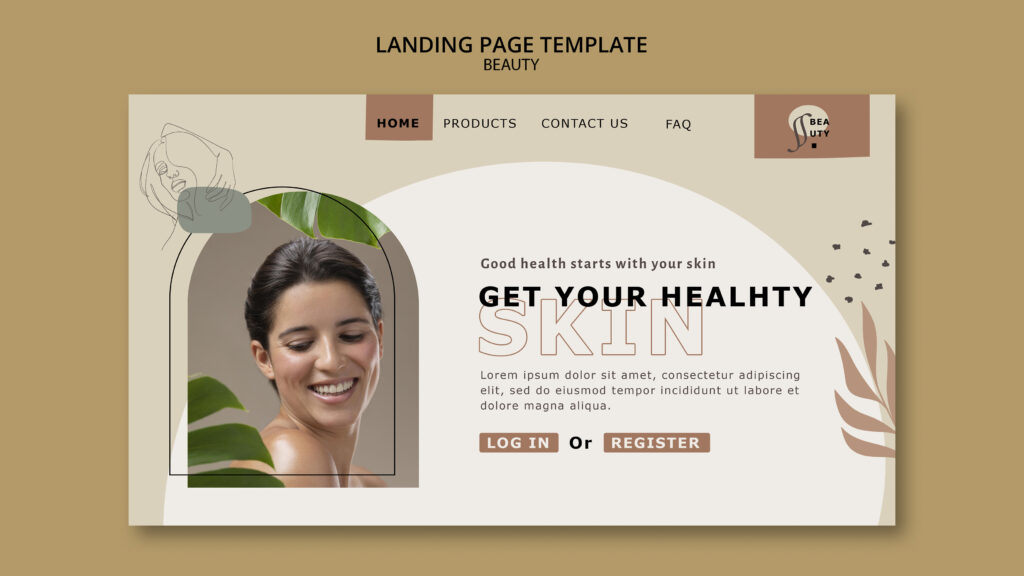
Getting traffic to your website is only half the battle. To turn visitors into customers, you need powerful conversion rate optimization strategies. These are the methods and techniques used to increase the percentage of website visitors who complete a desired action (like booking a consultation or filling out a form). It’s the art and science of turning more of your existing visitors into valuable customers.
Instead of just pouring more money into ads, a smart set of conversion rate optimization strategies helps you maximize the return on the traffic you already have. Let’s dive into the essential strategies that can transform your website from a simple brochure into a powerful conversion machine.
The Foundation: Your Core Message and Landing Page
Before you tweak a single button, you need to nail the fundamentals. Your landing page is the stage, and your message is the main event.
1. Landing Page Optimization (LPO)
Landing page optimization is the process of enhancing every element on a dedicated page to increase conversions (see our landing page optimization guide to turn clicks into customers). Shockingly, About 50% of B2B clicks from ads, email, or search are directed to a homepage, not a special landing page. This is a huge missed opportunity. Businesses that use more landing pages see significantly more leads; companies with over 40 landing pages generate 12 times more leads than those with five or fewer. Effective LPO ensures your page is a focused, persuasive experience that guides the visitor toward a single goal.
2. Value Proposition Clarity
If a visitor can’t figure out what you do and why it matters within 10 seconds, they’re gone. Your value proposition must be crystal clear. It should instantly answer, “What’s in it for me?” A study found that 46% of B2B website visitors will leave a site if the company’s message is unclear. In one A/B test, a company improved its value proposition headline and saw an 87.61% increase in landing page conversion rate because the benefit became immediately obvious.
3. Headline and Subheading Optimization
On average, eight out of ten people will read your headline, but only two out of ten will read the rest of your copy. Your headline is your one shot to grab attention. It needs to be compelling, clear, and relevant. In the famous 2008 Obama campaign, an A/B test of the campaign’s splash page (media and button) increased sign-ups, which translated into an additional $60 million in donations. Subheadings support the headline, adding extra detail or benefits to pull the reader further down the page.
4. Body Copy Optimization
Most website visitors don’t read, they scan. In fact, usability studies show 79% of people scan pages. Your body copy must be easy to skim with short paragraphs, bullet points, and bolded text. Simplicity also wins; one report found pages written at a 5th to 7th grade reading level convert at 11.1%—56% higher than pages written at an 8th–9th grade level, and more than 2x higher than professional-level writing (5.3%). This doesn’t mean dumbing it down, it means being clear and direct.
Creating a Seamless User Experience
A great message can be undermined by a poor user experience. Visuals, speed, and focus are critical conversion rate optimization strategies.
1. Image Optimization
Humans are visual creatures. The right images build trust and convey value faster than text. According to one Etsy survey, 90% of shoppers said image quality was “extremely” or “very” important to their purchase decision. Using high quality, authentic photos of your team or real customer results can build immense trust. However, large images can slow your site down, which kills conversions. Optimizing images means compressing them for fast loading without sacrificing quality.
2. Site Speed Optimization
Page speed is not just a technical issue, it’s a core CRO principle. Slow loading times are a major source of friction that causes visitors to abandon your site before they even see your offer. Studies have shown that even a one second delay in page load time can result in a significant drop in conversions. For example, a page that takes more than three seconds to load can lose around 40% of its visitors. To improve speed, you should optimize images, leverage browser caching, and minimize bulky code (see our guide to website speed and conversions for a step-by-step checklist). A fast, snappy website feels professional and keeps users engaged long enough for your message to work.
3. Navigation Clarity
If users can’t find what they’re looking for, they will leave. It’s that simple. One survey revealed that 94% of people consider easy navigation a website’s most critical feature. Confusing menus are a major reason for abandonment. Keep your navigation simple, use plain language (for example, “Services” instead of “Solutions”), and limit the number of main menu items to avoid overwhelming visitors. A clear path, built with user journey mapping, guides users confidently toward your conversion goals.
4. Reduce Page Distraction
The more choices you offer, the harder it is for someone to make one. This is known as Hick’s Law. On a landing page, you want to focus the user’s attention on a single action. Unfortunately, nearly 48% of landing pages contain more than one offer, which can distract and confuse visitors. To reduce distraction, remove unnecessary navigation menus, competing calls to action, and irrelevant sidebars on your key landing pages. Our take on minimalist vs. maximalist web design explains why fewer choices often convert better. This creates a focused environment where the desired action is the most logical next step.
Driving the Action: Getting the Conversion
This is where the magic happens. These conversion rate optimization strategies focus on the critical moment a visitor decides to act.
1. Call to Action (CTA) Optimization
Your call to action is the gateway to conversion. Small changes can have a huge impact. For example, personalized CTAs have been shown to convert an incredible 202% better than generic ones. Instead of a bland “Submit,” try action oriented, benefit driven copy like “Get My Free Quote.” Design also matters. In one famous test, changing a CTA button’s color from green to red increased clicks by 21% simply because it stood out more. For more practical ideas, explore website design for conversion optimization.
2. Lead Form Optimization
Your lead form is the bridge between an anonymous visitor and a potential customer. Make it as easy and inviting as possible. This involves:
- A clear headline: Tell users what they get for filling it out.
- Simple design: Use a clean layout with clearly labeled fields.
- Trust signals: Add a small note like, “We respect your privacy,” to reduce anxiety.
For businesses that rely on inquiries, like the clinics DevMart serves, a well designed form is absolutely essential for capturing leads effectively.
3. Form Length Reduction
Every field you add to a form increases friction. The average e commerce checkout has over 11 fields, but most could function with just eight. Reducing the number of fields can dramatically increase submissions. One famous case study showed that cutting a form from 11 to just 4 fields resulted in a 120% increase in conversions. Ask only for what you absolutely need to get started.
4. Avoid Forced Account Creation
Requiring users to create an account before they can check out or access a resource is a major conversion killer. About one in four shoppers will abandon a purchase if they are forced to register an account first. By offering a “guest checkout” option, you remove a significant barrier. One retailer boosted their completed orders by 45% simply by adding this choice.
Building Trust and Engagement (Especially for Service Businesses)
For service providers like medical clinics or consultants, trust is the currency of conversion.
1. Trust and Credibility Building
People do business with companies they trust. A study found that 46.1% of site evaluators used a site’s overall visual design to assess its credibility. You can build credibility by:
- Showcasing social proof: Displaying testimonials and reviews, plus case studies.
- Using trust badges: Including security seals (like SSL) or professional accreditations.
- Being transparent: Clearly listing your contact information and team bios.
2. Patient Engagement Optimization
For clinics and healthcare providers, engagement is key. An engaged visitor is more likely to become a trusting patient. Interactive content like quizzes or videos can increase conversion rates by up to 86%. Providing valuable content, such as detailed service pages, before and after galleries, and educational blog posts that use storytelling in website design, keeps potential patients on your site longer, building the confidence they need to book an appointment. Many of the successful clinic websites designed by DevMart include these engaging features.
3. Online Appointment Booking Optimization
Making it easy for clients to book an appointment is a game changing conversion strategy. A survey found that 94% of respondents would be more likely to choose a new service provider if that provider offered online booking options. Furthermore, about 40% of appointments are booked after business hours, a reminder that your website should be working 24/7. By implementing a seamless, mobile friendly booking system, you capture these highly motivated prospects. The key is to make the booking CTA prominent and the process itself quick, requiring just a few clicks.
Proving It Works: Testing and Measuring Success
Effective conversion rate optimization strategies aren’t about guesswork. They are a data driven process for achieving tangible business results.
1. A/B Testing and Experimentation
A/B testing (or split testing) is how you prove what works. You compare two versions of a page (a control and a variation) to see which one performs better. While it’s a proven method, only about 52% of companies that use landing pages actually test them. Companies that embrace a culture of continuous experimentation let user behavior, not opinions, guide their decisions. This leads to compounding gains over time.
2. ROI Maximization through CRO
Ultimately, the goal of all these conversion rate optimization strategies is to maximize your return on investment. On average, for every $92 companies spend to acquire traffic, they only spend $1 trying to convert it. By focusing on optimization, you make every dollar of your ad spend work harder. If you double your conversion rate from 2% to 4%, you’ve effectively halved your cost per lead without spending more on traffic. CRO is about creating a more efficient business engine that turns clicks into customers profitably.
By applying these principles, you can systematically improve your website’s performance. For expert help implementing these conversion rate optimization strategies, you can always get a free consultation with DevMart to see how a conversion focused approach can grow your business.
Frequently Asked Questions
What are conversion rate optimization strategies?
Conversion rate optimization strategies are the various methods and techniques used to increase the percentage of website visitors who complete a desired action. This includes improving website copy, simplifying forms, enhancing page design, building trust, and running A/B tests to identify what changes lead to better performance.
How do I start with CRO?
A great place to start is with web analytics. Look at your data to identify which pages have high traffic but low conversion rates. Use tools like heatmaps to see how users are interacting with these pages. From there, form a hypothesis (for example, “Making the CTA button more prominent will increase clicks”) and run an A/B test to validate it.
What is a good conversion rate?
A “good” conversion rate varies widely by industry, traffic source, and the specific conversion goal. Across industries, the average landing page conversion rate is around 9% to 10%. However, the top performing pages can see rates of 11.45% or higher. The best approach is to benchmark against your own past performance and focus on continuous improvement.
Why is A/B testing important for conversion rate optimization strategies?
A/B testing is crucial because it takes the guesswork out of optimization. Instead of relying on opinions or what you think will work, it provides real data on how users behave. This allows you to make informed, evidence based decisions that lead to genuine improvements in your conversion rates.
Can small changes really make a big difference?
Absolutely. Seemingly minor tweaks can have a surprisingly large impact. For example, Expedia famously earned an extra $12 million in profit per year by removing a single, confusing optional field from their booking form. This demonstrates how removing even a small point of friction can lead to significant gains.
How long does it take to see results from CRO?
You can sometimes see results from a single successful A/B test within a couple of weeks, depending on your traffic volume. However, CRO is best viewed as an ongoing process, not a one time project. The most significant results come from a culture of continuous testing and improvement, where small wins compound over time to create substantial growth.